How Dragonfly Home Inspections uses a thermal camera during your home inspection to spot temperature clues the eye can’t see, and what those images can and can’t tell you.
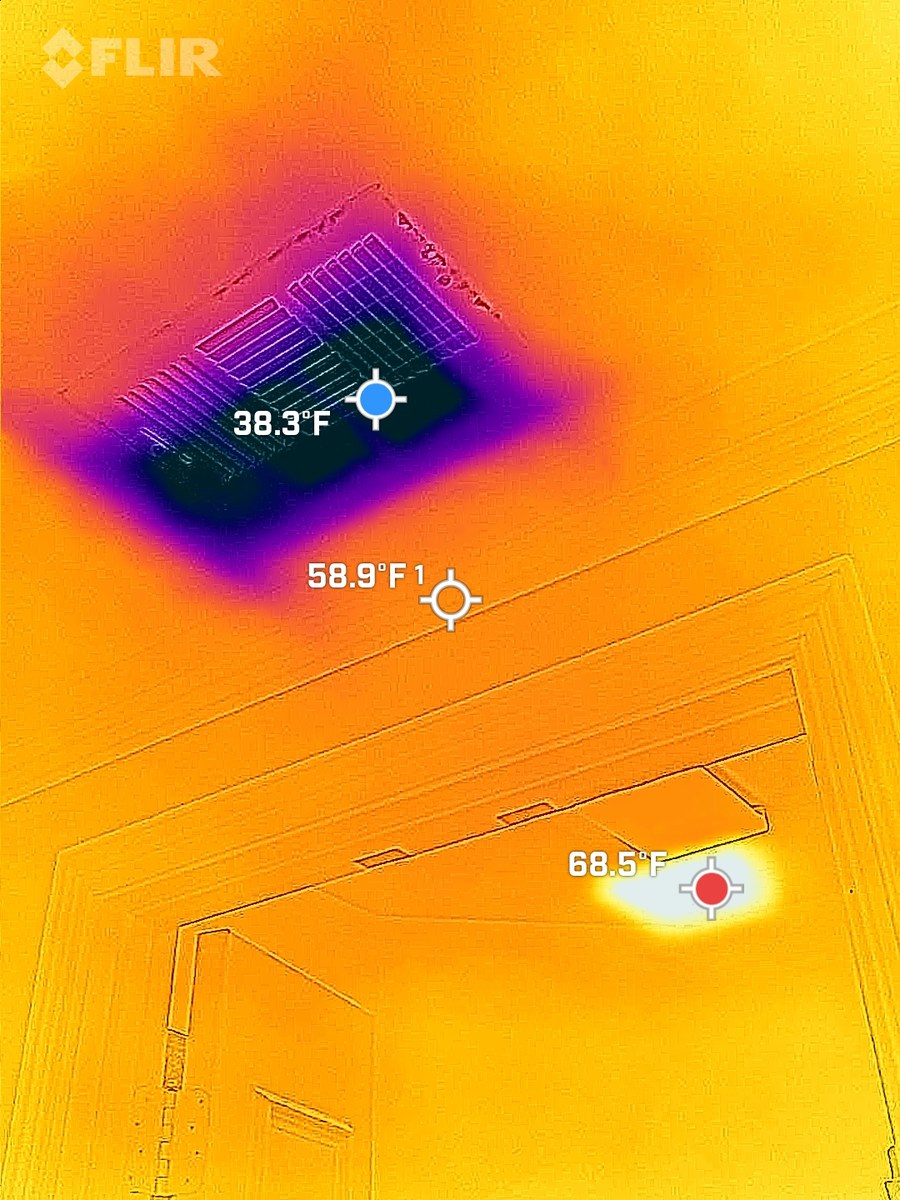
Thermal check at a supply register during cooling
What Thermal Imaging Is
A thermal (infrared) camera turns surface temperatures into a picture. Warmer and cooler areas show up as different colors, so patterns that are invisible in a normal photo, like a cool damp spot on a ceiling or a gap in wall insulation, can stand out on the screen.
Thermal imaging is not a separate service. It is one of the tools our inspectors use during a home inspection, alongside a moisture meter, outlet tester and thermometer, to support the visual inspection performed under the TREC Standards of Practice. Thermal imaging is included at no extra cost with every full home inspection. Thermal images are included in your report where they help explain a finding.
What It Can Help Reveal
A temperature difference is a clue, not a diagnosis. Depending on conditions, the camera can help point to:
Missing or incomplete insulation in walls and ceilings, for example rooms where insulation appeared to be missing or not performing in sections.
Hidden moisture at ceilings, walls and floors, which helps us tell an old ceiling stain from an active leak once it is checked with a moisture meter.
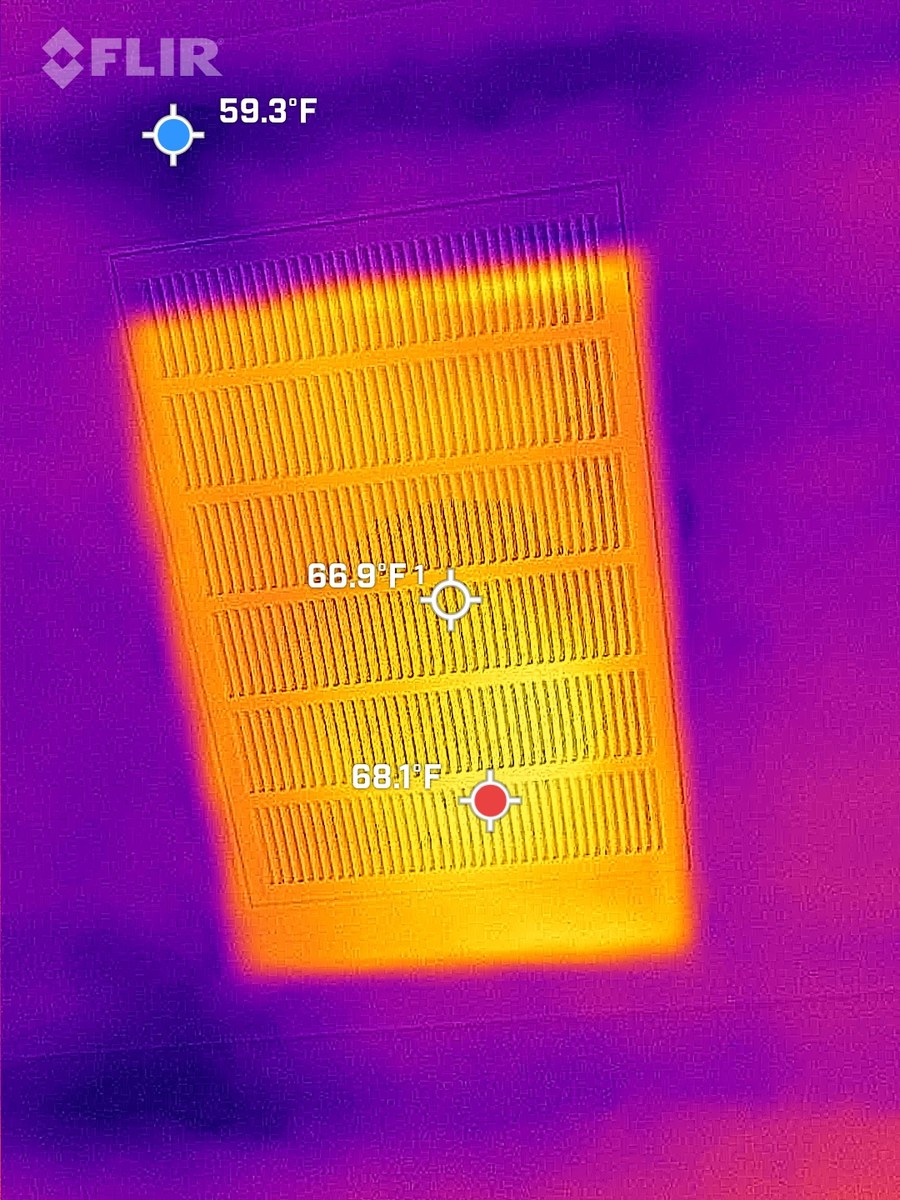
Heating and cooling performance: supply and return air temperatures at the registers and grilles, and ductwork or insulation problems that are not visible to the eye.
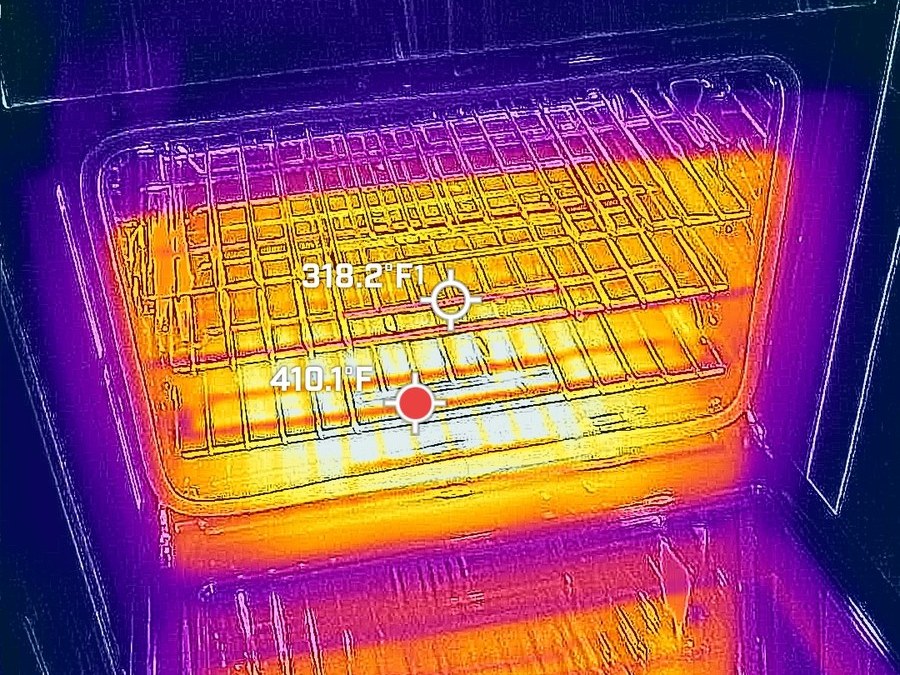
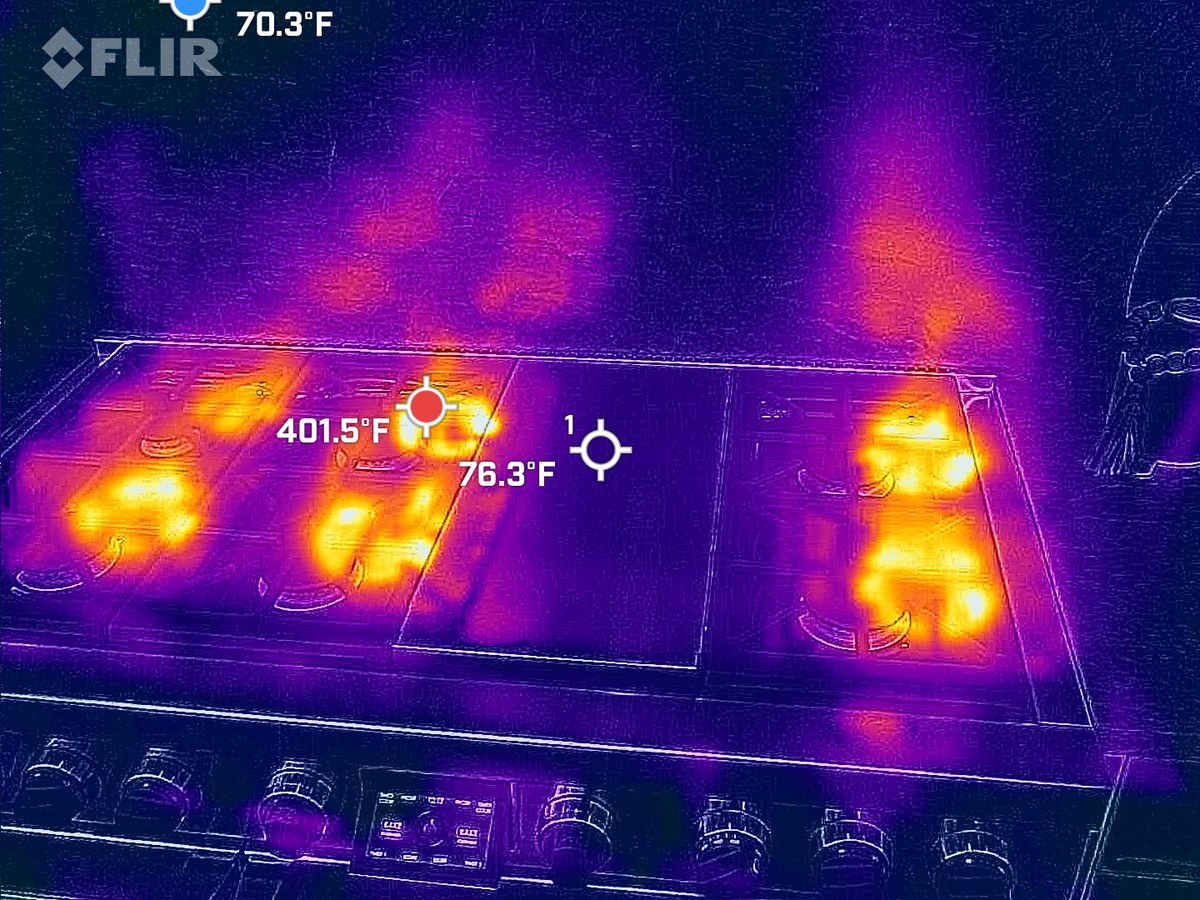
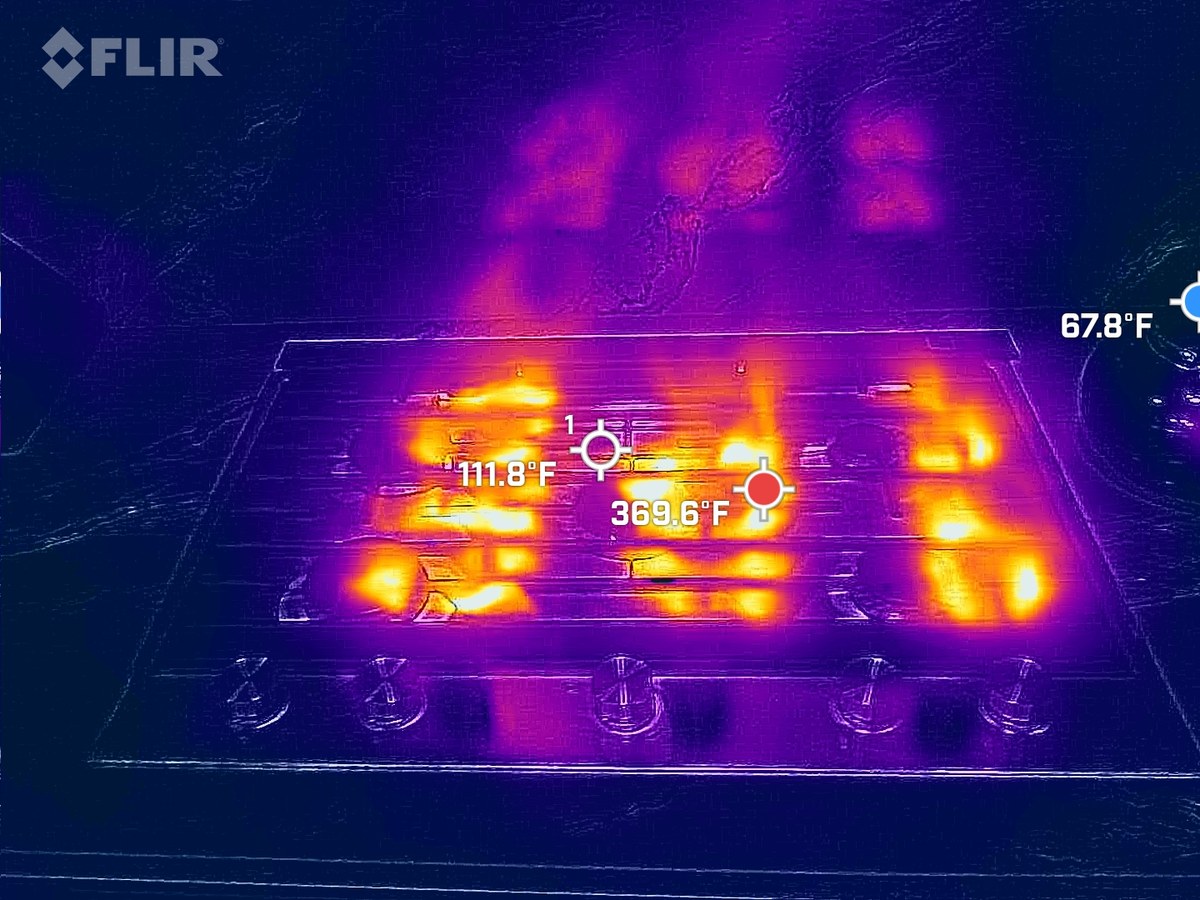
Appliance operation: ovens set to 350°F and scanned once they report reaching temperature, and cooktop burners checked as they heat, including a griddle that was not heating.
Possible roof, plumbing or condensate leaks that leave a cool, damp pattern on a ceiling or wall.
Electrical warm spots at visible components, which we report for evaluation by a licensed electrician.
Oven heating verified with thermal imagingReturn air temperature readingRange-top burners checked; griddle not heatingCooktop burners verified
How We Use It During Your Inspection
Our inspectors use thermal imaging as they work through the home: scanning ceilings and walls, especially below bathrooms, around windows and under the attic; reading supply and return temperatures at the HVAC registers; looking for insulation gaps from inside the rooms; and checking appliances as they heat. When the camera shows a pattern that could be moisture, we check it with a moisture meter before reporting it, and we explain in plain language what we saw and which professional should look further.
Limitations to Know
It isn’t X-ray vision. The camera reads surface temperatures only. It cannot see through walls, floors or ceilings, or show what is inside them.
It needs a temperature difference. Weather, sun, how long the HVAC has run and recent water use all affect what shows up. A leak that has dried out or reached room temperature may not appear at all.
Patterns can look alike. An air leak, an insulation void and moisture can produce similar images, which is why suspected moisture is confirmed with a moisture meter.
It can’t find the source or test for mold. Thermal imaging may show where a problem appears, not what caused it, and we don’t perform mold testing.
It isn’t a guarantee. Like the rest of the inspection, thermal imaging reflects conditions at the time of the inspection. Some construction, such as brick, stone and reflective surfaces, is hard to read.
Just Want a Thermal Scan?
Thermal imaging can also be ordered on its own as a single-component inspection, just like any other item or system we inspect. Mention it when you schedule online or request a quote.