
Comfort through a Texas summer starts with a system that is working as intended.
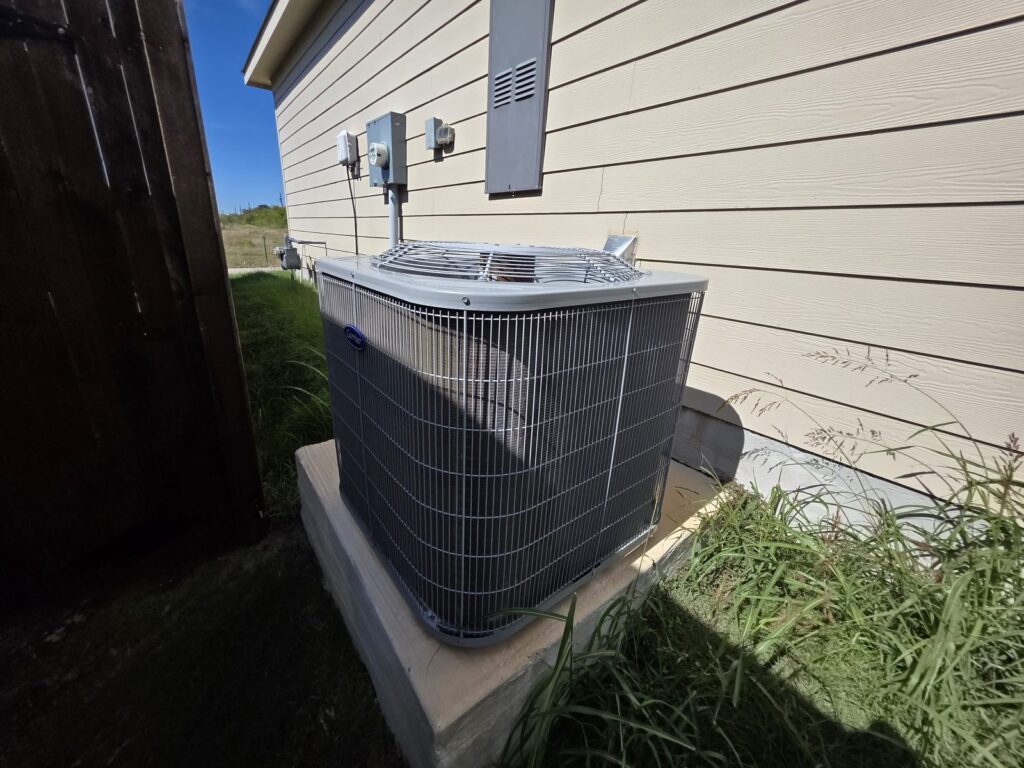
We operate the heating and cooling equipment with normal controls, record each unit’s brand and approximate age, and use the thermal camera to measure the temperature split between the return grilles and supply registers on every inspection. We inspect furnace burners and venting, the condensing unit and its pad, accessible ductwork, filters, drip pans and condensate lines. In the thermal images, the grid inside each square is the register or return grille, so we can compare the air coming out of the supply registers with the air going back into the returns, and spot ductwork or insulation problems that are not visible to the eye.
For cooling, we look for a temperature split (the difference between return and supply air) of 18°F or better; the industry-acceptable minimum is 15°F. We determine whether the system is performing within a reasonable range based on the type and age of the system, or the manufacturer’s guidelines. What’s acceptable depends on the age and type of system, so our inspectors use years of field experience to judge each one.
These are the conditions that come up most often in our reports for this part of the home:
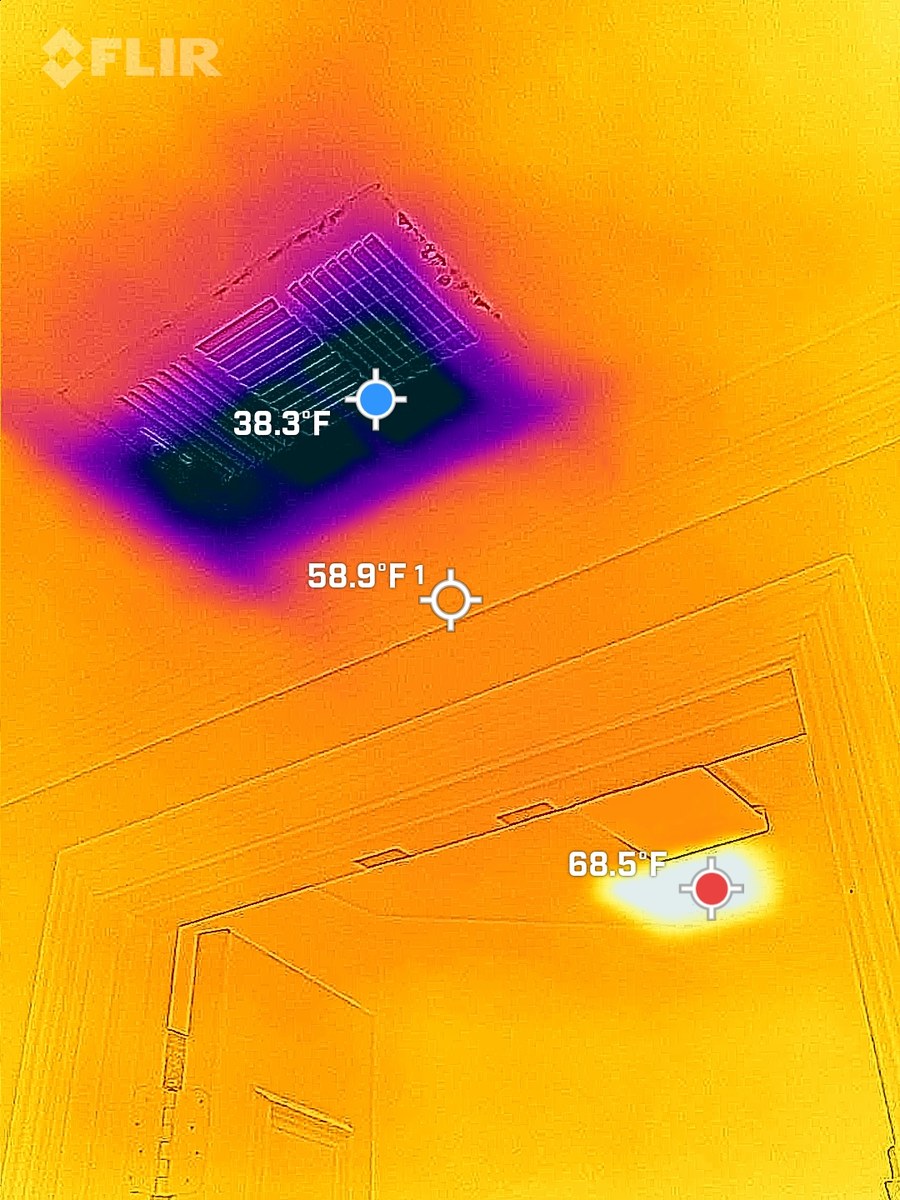
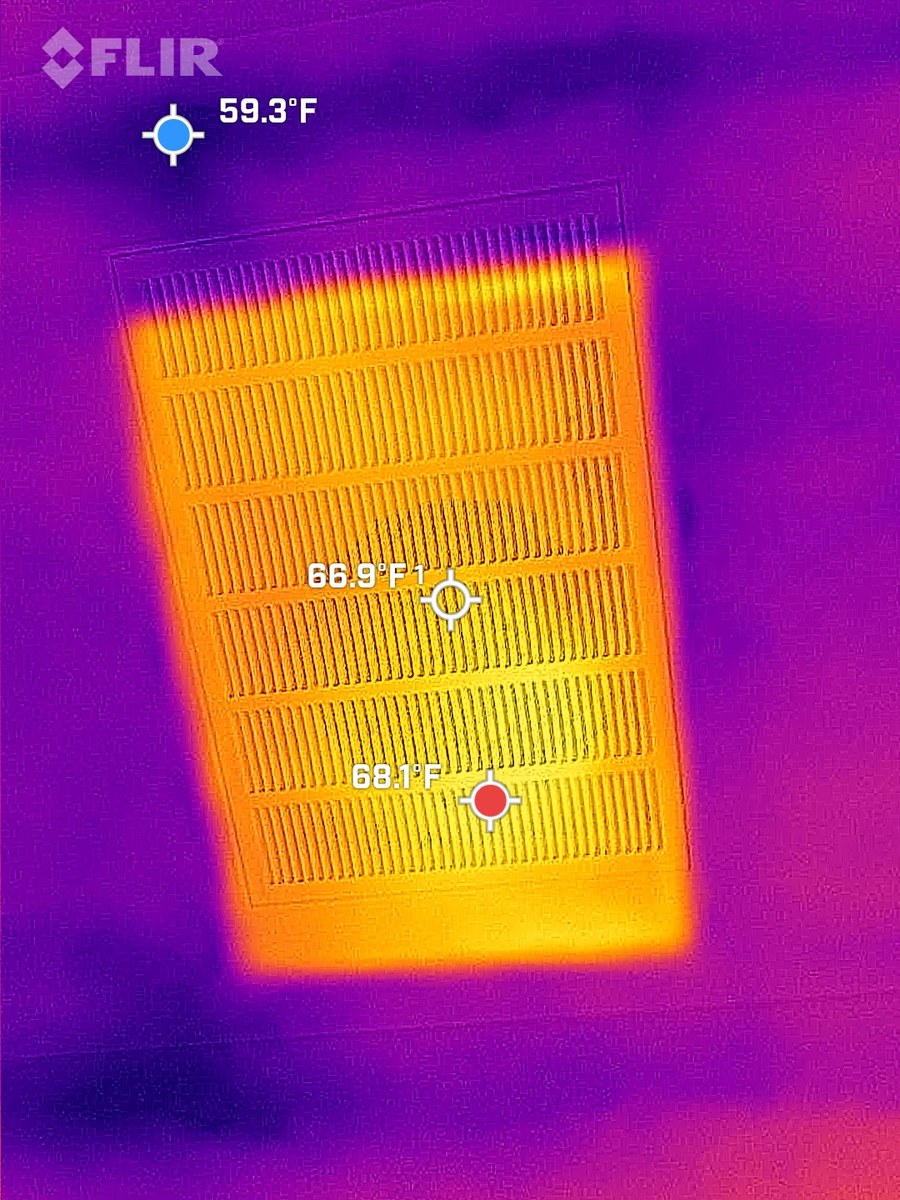
Heating and cooling equipment is costly to replace, and attic installations in North Texas work hard for months at a time. Knowing the age and performance of each unit helps you budget, negotiate and schedule service before the first hot week.
← Back to Residential Home Inspection
Book online in minutes or request a quote. Prefer to talk it through? Call (817) 454-1066 or email info@dragonflyinspections.com.