How Dragonfly Home Inspections uses a thermal camera during your home inspection to spot temperature clues the eye can’t see, and what those images can and can’t tell you.
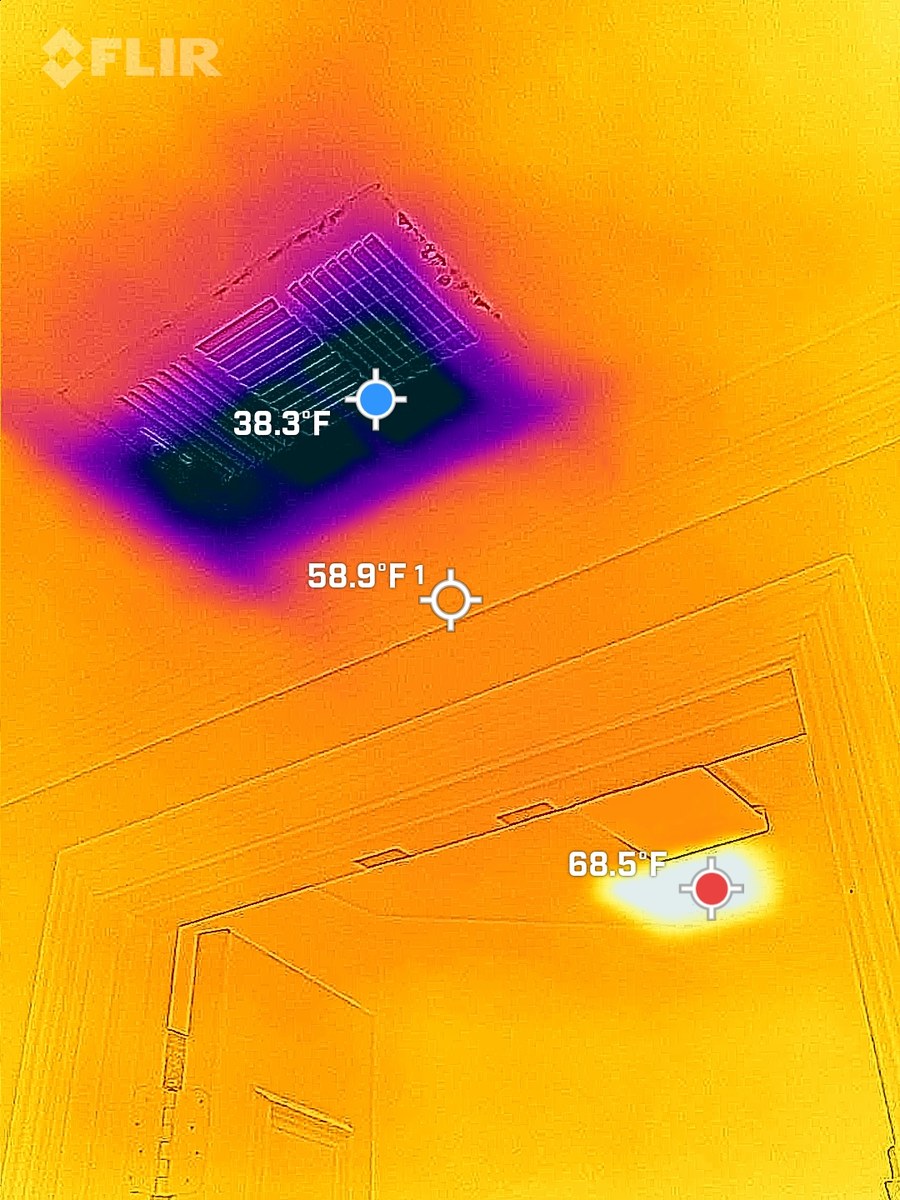
Thermal image of a supply register. The grid inside the square is the register grille, and the cool colors show conditioned air coming out.
What Thermal Imaging Is
A thermal (infrared) camera turns surface temperatures into a picture. Warmer and cooler areas show up as different colors, so patterns that are invisible in a normal photo, like a cool damp spot on a ceiling or a gap in wall insulation, can stand out on the screen. We use thermal cameras.
Thermal imaging is not a separate service. It is one of the tools our inspectors use during a home inspection, alongside a moisture meter and outlet tester, to support the visual inspection performed under the TREC Standards of Practice. Thermal imaging is included at no extra cost with every full home inspection. Thermal images are included in your report where they help explain a finding.
What It Can Help Reveal
A temperature difference is a clue, not a diagnosis. Depending on conditions, the camera can help point to:
Missing or incomplete insulation in walls and ceilings, for example rooms where insulation appeared to be missing or not performing in sections.
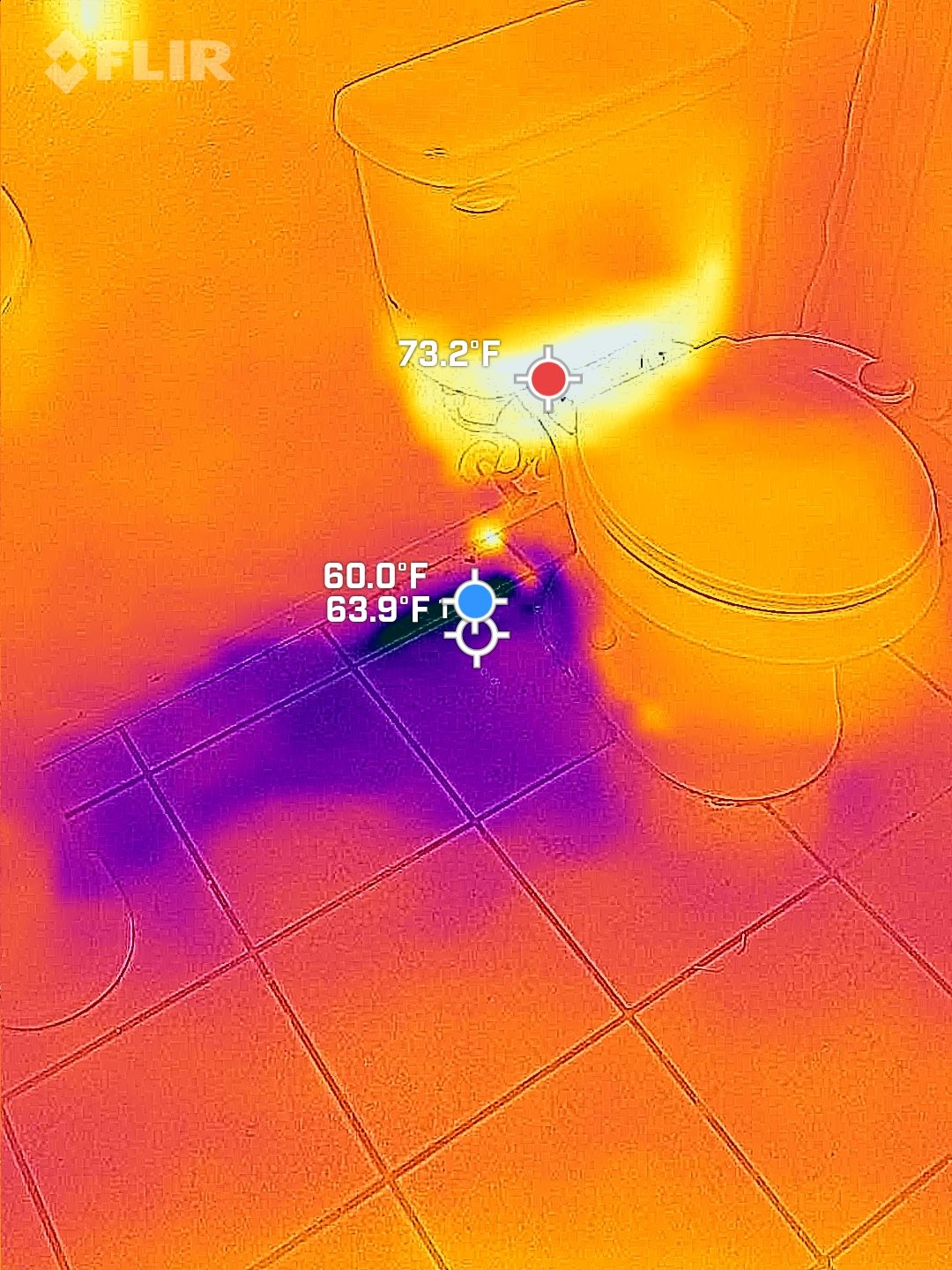
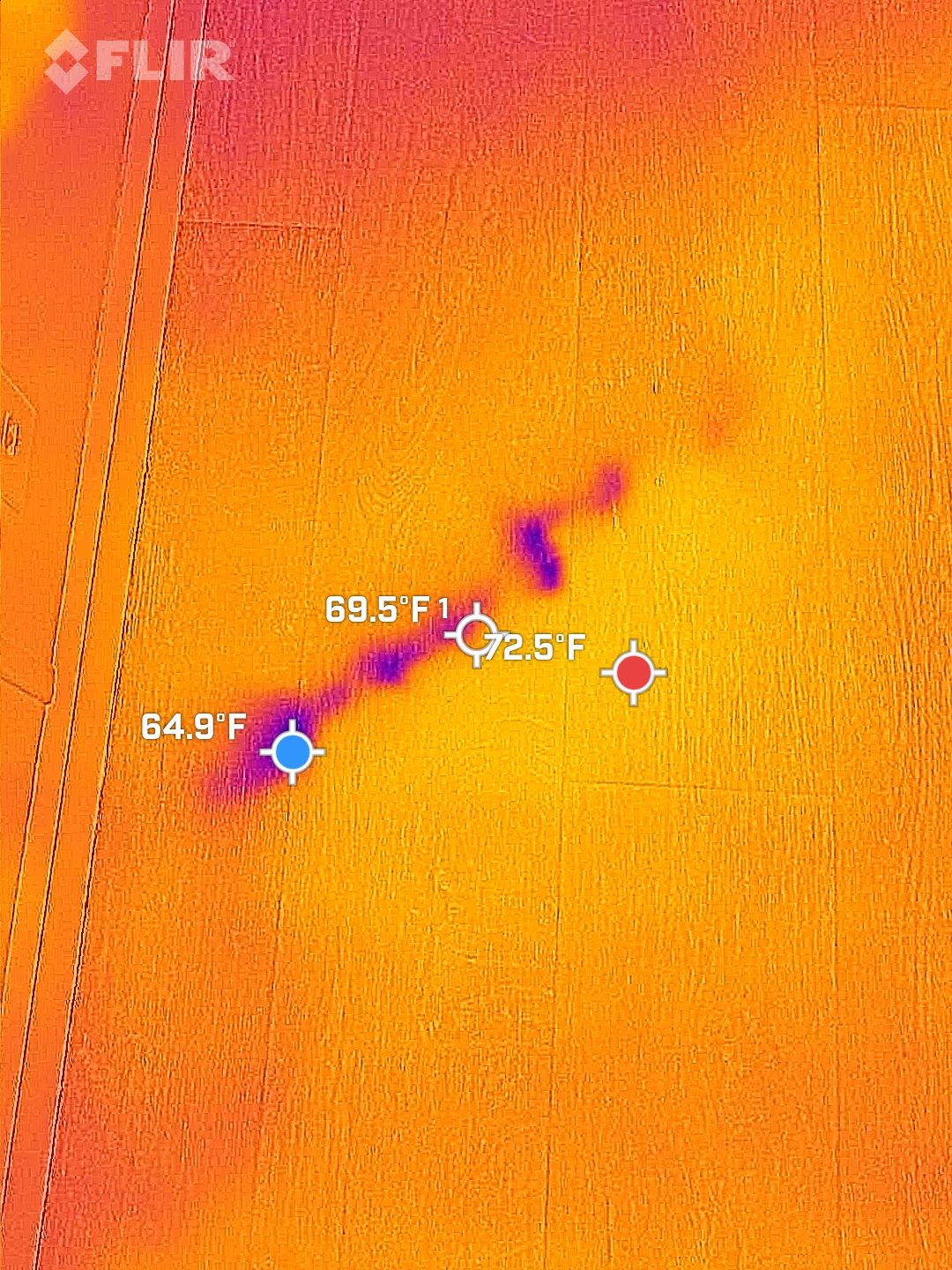
Hidden moisture at ceilings, walls and floors, which helps us tell an old ceiling stain from an active leak once it is checked with a moisture meter.
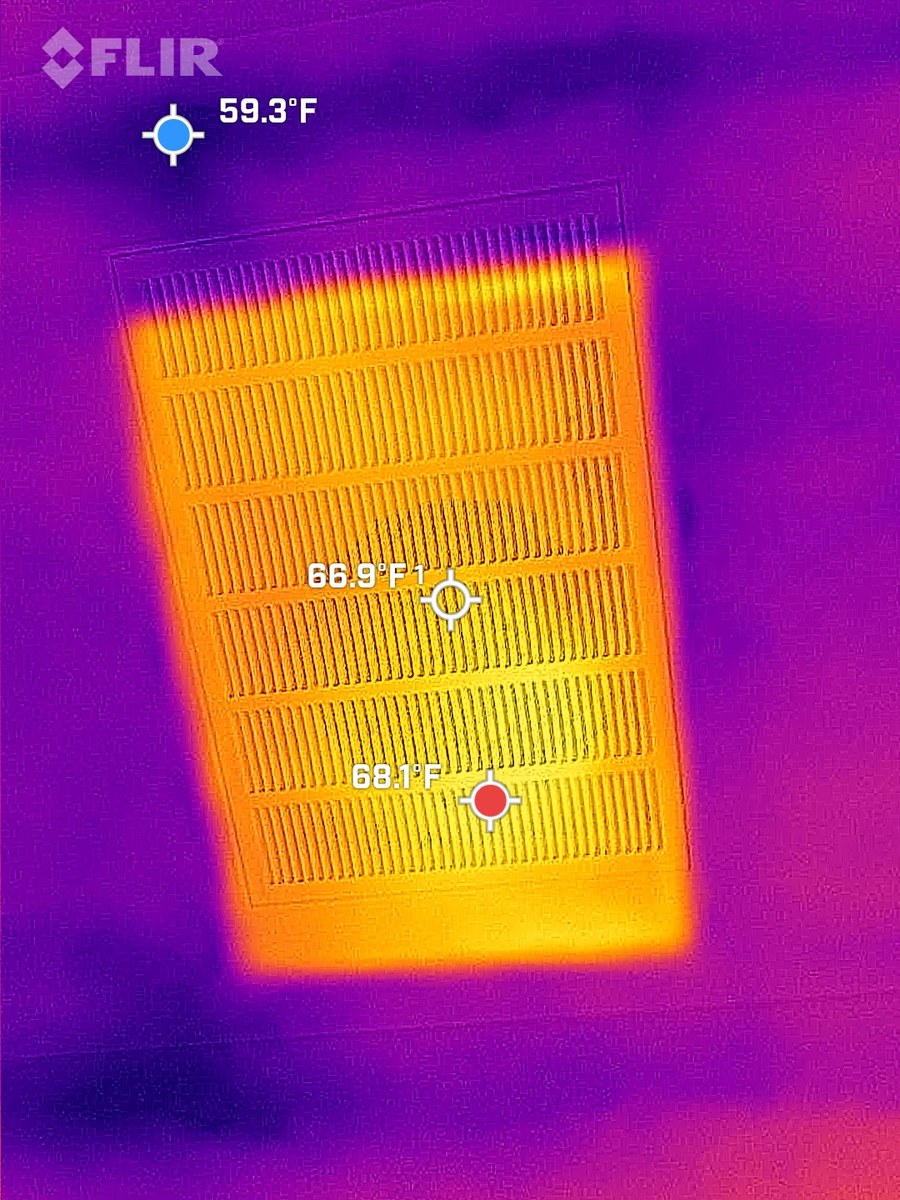
Heating and cooling performance: thermal images of the supply registers and return grilles to measure the A/C split, and ductwork or insulation problems that are not visible to the eye.
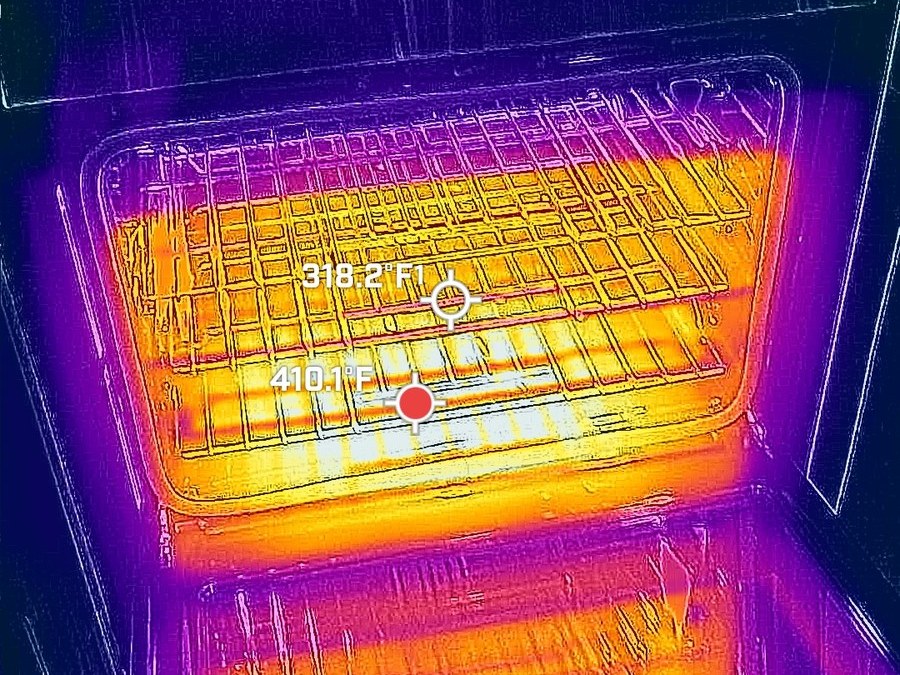
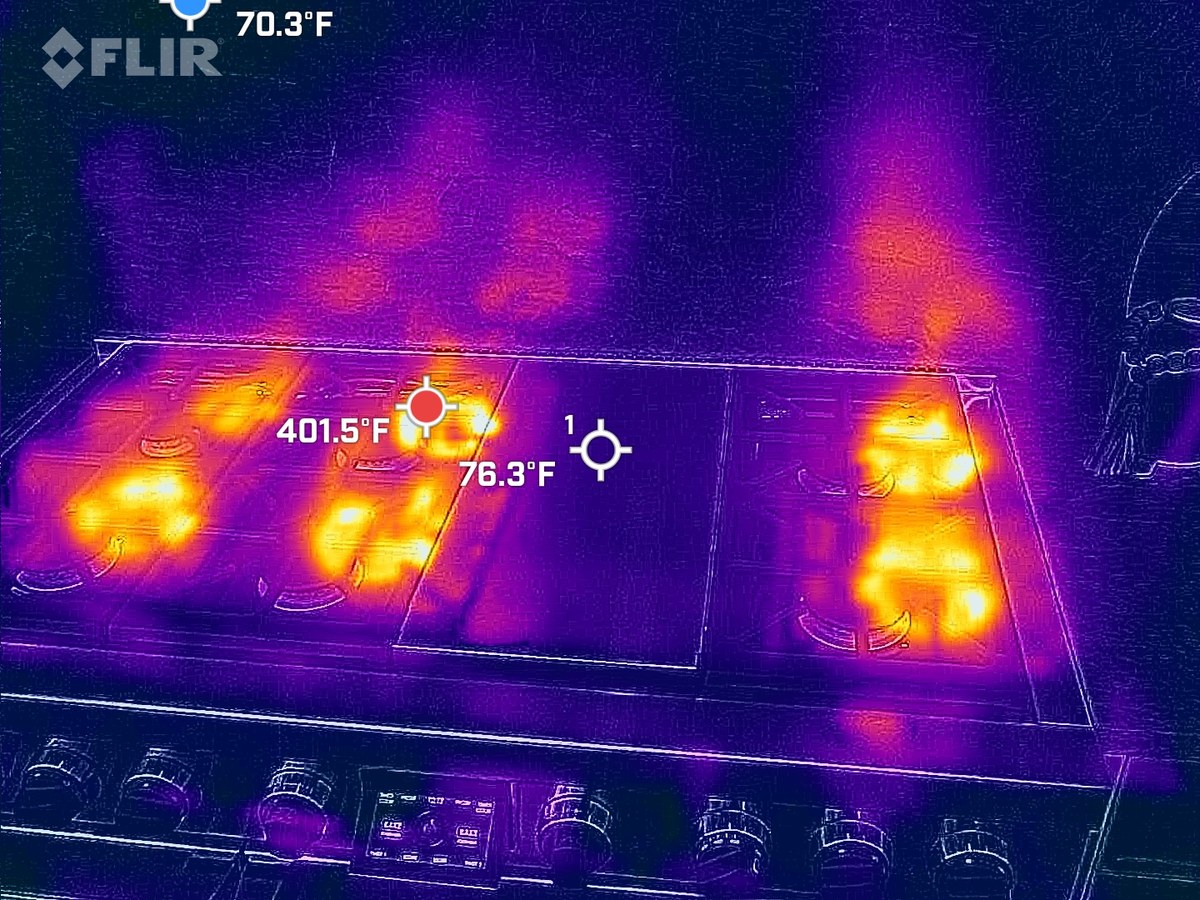
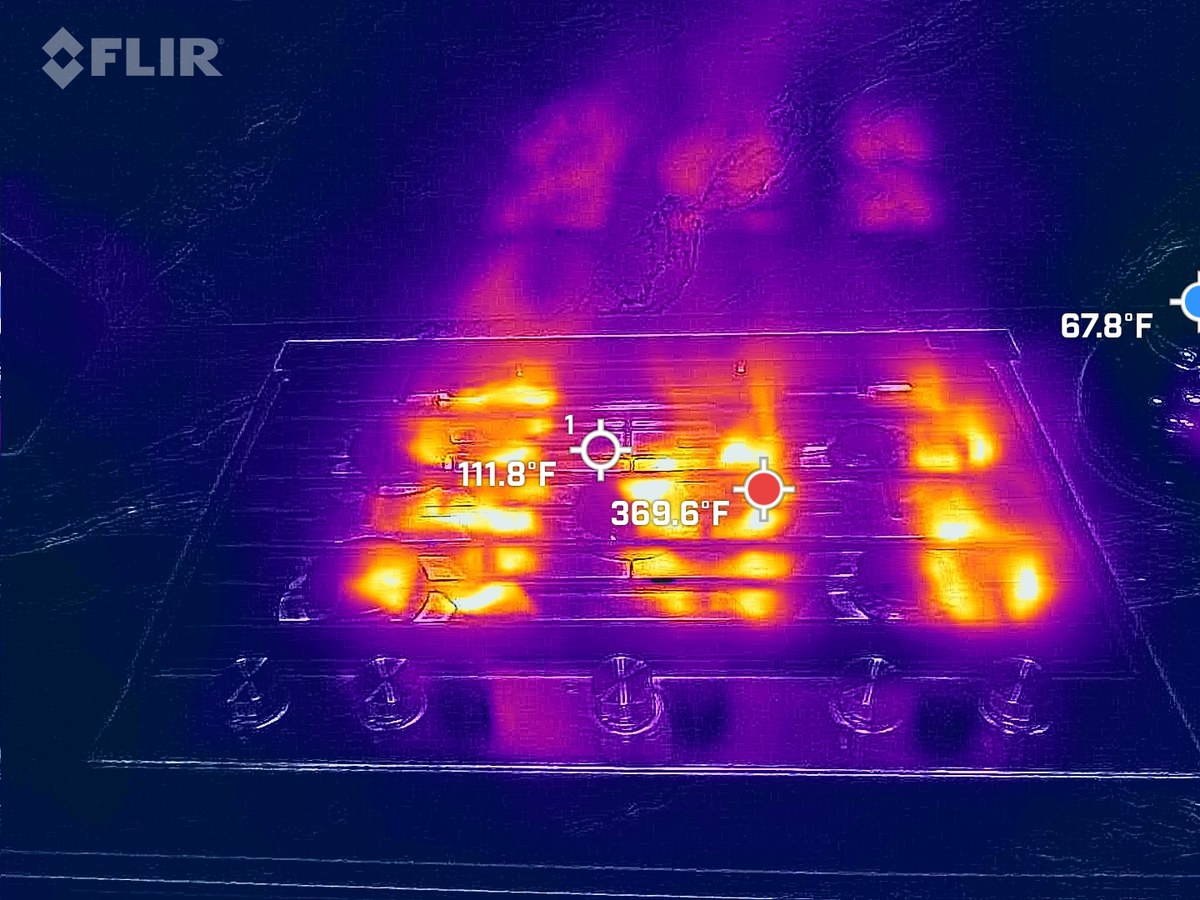
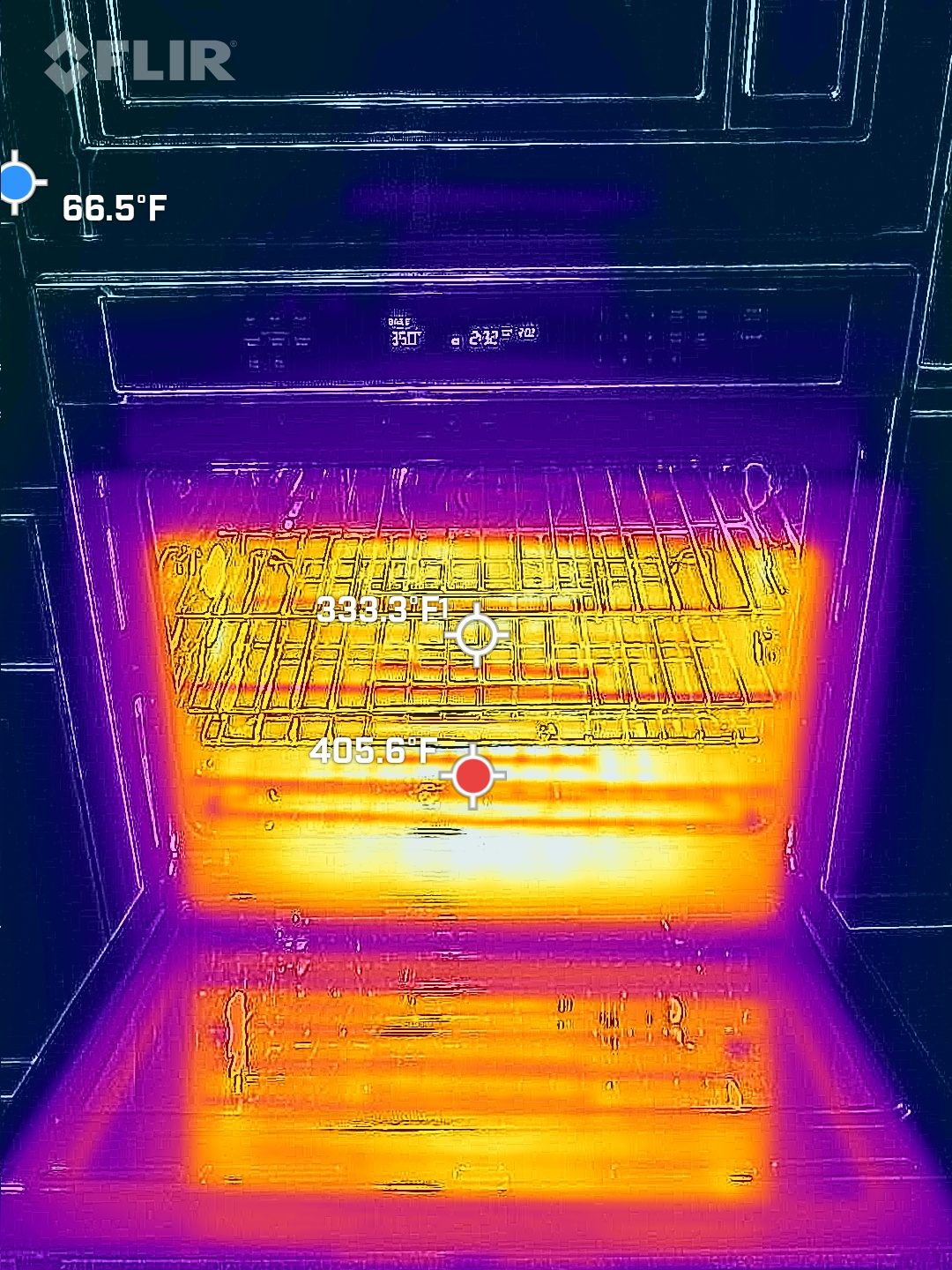
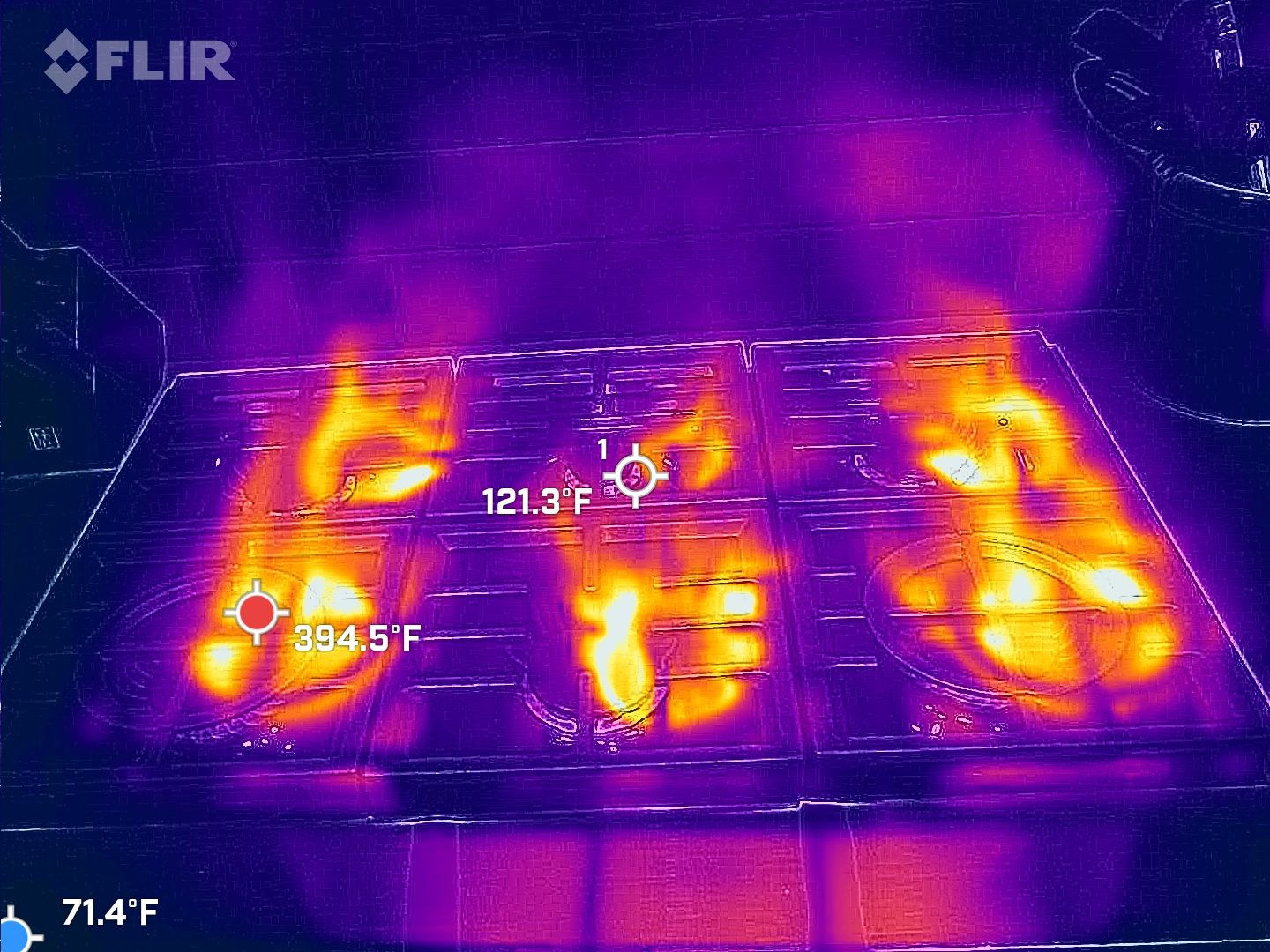
Appliance operation: ovens set to 350°F and scanned once they report reaching temperature, and cooktop burners checked as they heat, including a griddle that was not heating.
Possible roof, plumbing or condensate leaks that leave a cool, damp pattern on a ceiling or wall.
Electrical warm spots at visible components, which we report for evaluation by a licensed electrician.
Oven heating verified with thermal imagingThermal image of a return grille. The grid inside the square is the return grille, where room air is pulled back into the system. Comparing the return with the supply registers is how we measure the A/C split.Range-top burners checked; griddle not heatingCooktop burners verified
Thermal Images From Real Inspections
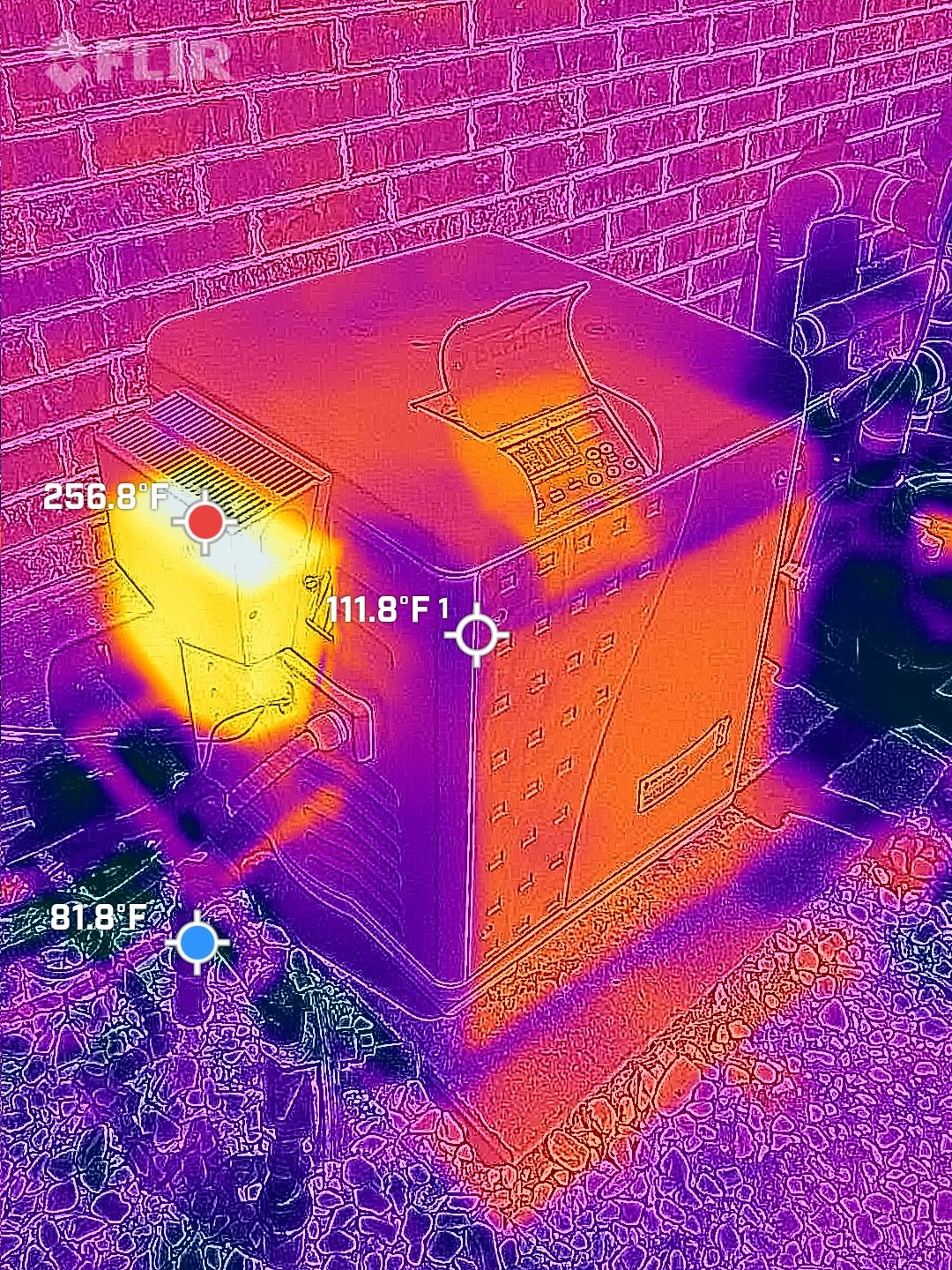
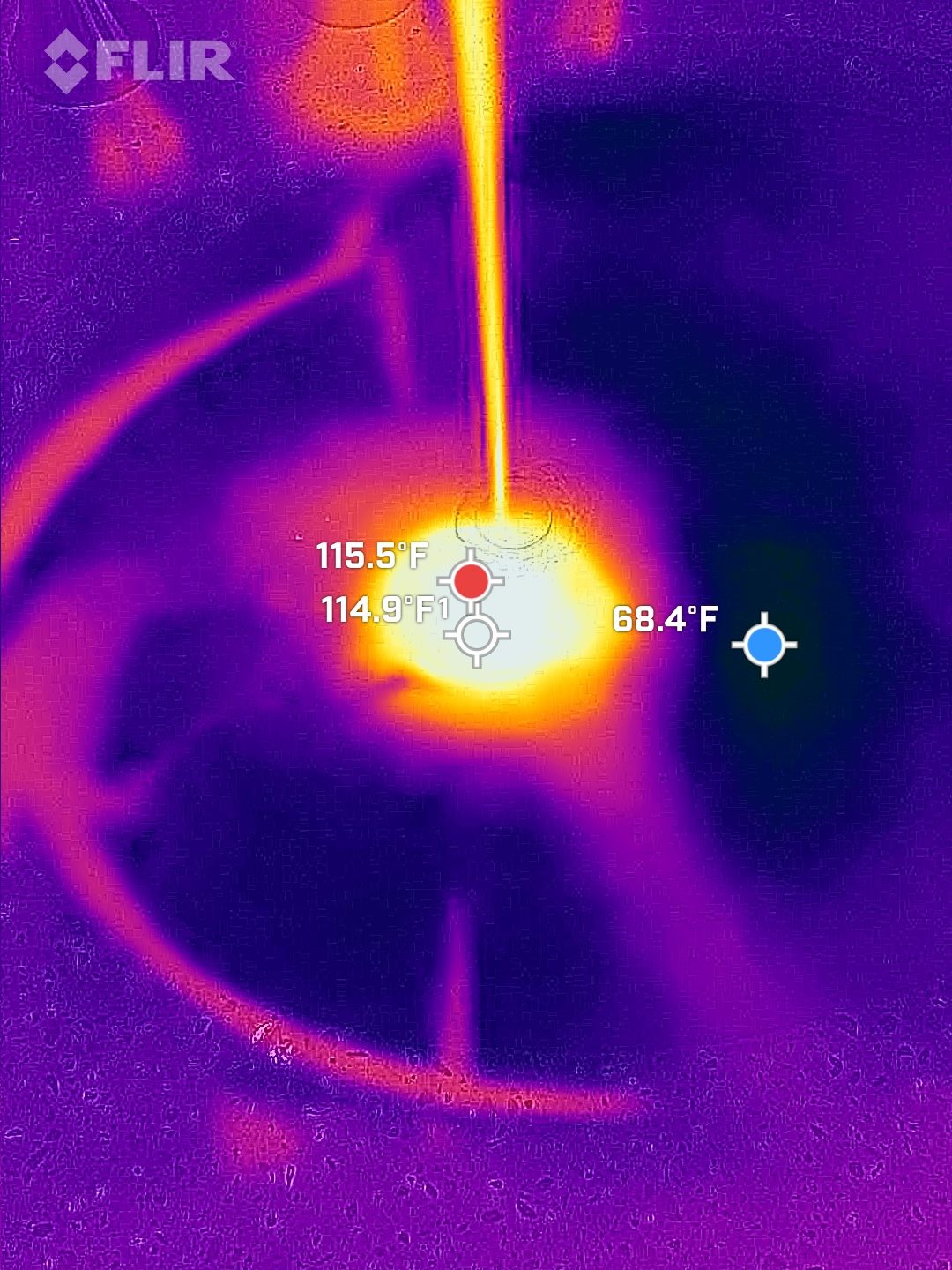
Thermal image showing water (the cool purple area) on the floor around the toilet base. A moisture meter confirms what the thermal image shows.Thermal image showing a trail of water (the cool purple streak) across the floor. A moisture meter confirms what the thermal image shows.Thermal image of a pool heater running normally. The hot spot is the burner and heat exchanger area during operation, which is what we expect to see when a heater is working.Thermal image of a supply register. The grid inside the square is the register grille, and the cool colors show conditioned air coming out.Thermal image of a return grille. The grid inside the square is the return grille, where room air is pulled back into the system. Comparing the return with the supply registers is how we measure the A/C split.Hot water filling a tub, confirming the water heater is delivering hot water to the fixture.An oven at temperature. Thermal imaging lets us see that the elements and cavity are heating.All cooktop burners lit and heating, checked in one view.
How We Use It During Your Inspection
Our inspectors use thermal imaging as they work through the home: scanning ceilings and walls, especially below bathrooms, around windows and under the attic; imaging the supply registers and return grilles to measure the A/C split; looking for insulation gaps from inside the rooms; and checking appliances as they heat. When the camera shows a pattern that could be moisture, we check it with a moisture meter before reporting it, and we explain in plain language what we saw and which professional should look further.
Limitations to Know
It isn’t X-ray vision. The camera reads surface temperatures only. It cannot see through walls, floors or ceilings, or show what is inside them.
It needs a temperature difference. Weather, sun, how long the HVAC has run and recent water use all affect what shows up. A leak that has dried out or reached room temperature may not appear at all.
Patterns can look alike. An air leak, an insulation void and moisture can produce similar images, which is why suspected moisture is confirmed with a moisture meter.
It can’t find the source or test for mold. Thermal imaging may show where a problem appears, not what caused it, and we don’t perform mold testing.
It isn’t a guarantee. Like the rest of the inspection, thermal imaging reflects conditions at the time of the inspection. Some construction, such as brick, stone and reflective surfaces, is hard to read.
Just Want a Thermal Scan?
Thermal imaging can also be ordered on its own as a single-component inspection, just like any other item or system we inspect. Mention it when you schedule online or request a quote.